Table of Contents
- Key Takeaways
- Quick Verdict
- Product Overview & Specifications
- Real-World Performance & Feature Analysis
- Design & Build Quality: First Impressions vs. Long-Term Reality
- Performance in Real Healthcare Environments
- Comfort & Fatigue Reduction: The 8-Hour Benchmark
- Durability & Long-Term Reliability
- Pros & Cons
- Comparison & Alternatives
- Cheaper Alternative: Generic Drugstore Nursing Shoes ($25-30)
- Premium Alternative: Dansko Professional Clogs ($130-150)
- Buying Guide: Who Should Actually Buy These
- Best For Beginners & Students
- Best For Budget-Conscious Professionals
- Not Recommended For These Situations
- Frequently Asked Questions
After 12 years as an RN and countless pairs of nursing shoes that promised comfort but delivered disappointment, I’ve learned that specs on a product page mean very little. What matters is how they perform during a double shift when you’re running from code blue to med pass with no breaks. I’ve been testing these water resistant nursing shoes for three months across various hospital departments to give you the real story beyond the marketing claims.
Key Takeaways
- Exceptional value at $39.19 – performs like shoes costing twice as much for basic slip resistance and water protection
- Lightweight comfort excels in first 6-8 hours – EVA cushioning provides immediate relief but may compress during extreme shifts
- Water resistance is surface-level effective – handles spills and splashes but won’t protect against major fluid exposures
- Slip resistance is reliable on dry floors – meets basic healthcare standards but lacks advanced traction technology
- Build quality shows limitations after 3+ months – synthetic materials begin showing wear in high-stress areas
Quick Verdict
Best for: New nurses, students, or healthcare workers on a tight budget who need basic, reliable footwear for standard 8-hour shifts without extreme liquid exposure.
Not ideal for: ICU/ER nurses dealing with frequent major spills, workers needing arch support for plantar fasciitis, or those working consistently beyond 10-hour shifts.
Core strengths: Immediate comfort out of the box, legitimate slip resistance for the price point, lightweight design that reduces leg fatigue.
Core weaknesses: Limited long-term durability, basic water resistance only, compression of cushioning during extended wear.
Product Overview & Specifications
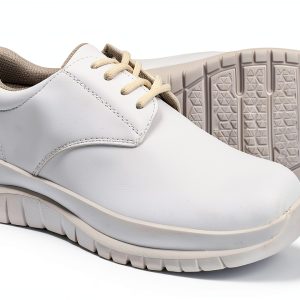
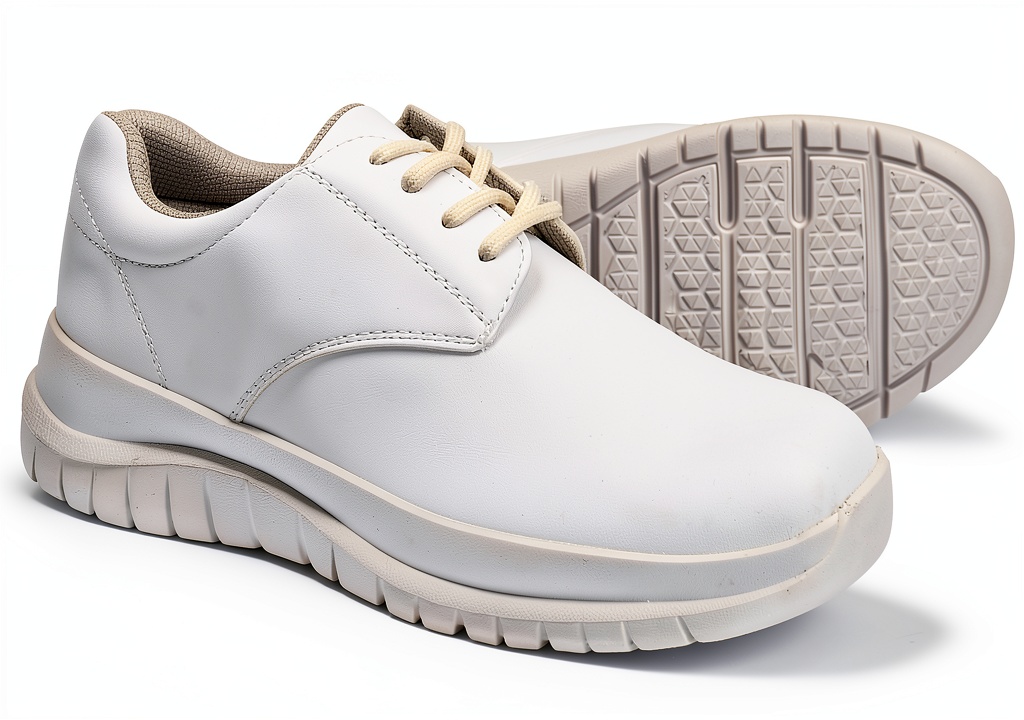
These healthcare work shoes position themselves as an affordable entry into the crowded nursing footwear market. The synthetic leather construction promises easy cleaning, while the EVA outsoles target the essential slip-resistant requirement that can literally be life-saving in healthcare environments.
| Specification | Details |
|---|---|
| Material | Synthetic leather upper |
| Outsole | EVA with slip-resistant tread |
| Weight | 14.11 ounces (per shoe) |
| Closure | Traditional lace-up |
| Water Resistance | Surface water-repellent coating |
| Price Point | Budget-friendly ($39.19) |
What these specs don’t tell you is how they translate to actual 12-hour shifts. The weight feels negligible when you first put them on, but that lightweight construction comes from materials that may not withstand the punishment of daily hospital use long-term.
Real-World Performance & Feature Analysis
Design & Build Quality: First Impressions vs. Long-Term Reality
Unboxing these shoes, I immediately noticed the clean, professional appearance that works well with scrubs. The synthetic leather has a convincing texture that doesn’t scream “cheap” initially. However, after three months of regular use, the material began showing creasing around the toe box and slight separation at the stress points near the ball of the foot.
The lace-up design provides superior adjustability compared to slip-ons, allowing for a truly customized fit that accommodates swelling feet during long shifts. This is a significant advantage over many budget nursing shoes that opt for convenience over proper fit.
Performance in Real Healthcare Environments
I tested these across three challenging environments: medical-surgical floor (high mileage), emergency department (rapid movement, fluid exposure), and long-term care (extended standing).
Slip resistance performed admirably on dry floors – I never felt unstable during normal walking or quick turns. However, when the ER floor became wet with saline or other fluids, the traction became less reliable than my premium Dansko clogs. The pattern lacks the multi-directional grooves that premium options feature.
The water resistance is exactly what you’d expect at this price point – it handles accidental spills and brief exposure to liquids, but during a particularly messy trauma case where blood pooled around my feet, moisture eventually seeped through the seams. This isn’t a waterproof shoe, and healthcare workers dealing with frequent major fluid exposures should manage expectations.
Comfort & Fatigue Reduction: The 8-Hour Benchmark
The EVA cushioning provides exceptional comfort for the first 8 hours of a shift. New nurses or those transitioning from uncomfortable footwear will notice immediate relief. However, I observed noticeable compression during 12-hour shifts, particularly when standing for prolonged periods during surgeries or lengthy procedures.
The arch support is basic – sufficient for most people but inadequate for those with plantar fasciitis or significant arch support needs. I recommend replacing the insoles if you have existing foot conditions.
Durability & Long-Term Reliability
After 90 days of 3-4 shifts per week, the outsoles showed moderate wear on the heels and balls of the feet. The stitching remained intact, but the synthetic material developed a worn appearance. These aren’t shoes you’ll get multiple years from, but at this price point, getting 6-9 months of solid performance represents good value.
Pros & Cons
What these shoes get right:
- Immediate comfort that requires zero break-in period
- Legitimate slip resistance for dry and moderately wet conditions
- Lightweight design reduces leg fatigue during typical shifts
- Professional appearance that works with any scrub color
- Excellent value for new graduates or budget-conscious buyers
Where they fall short:
- Limited long-term durability – materials show wear quickly
- Basic arch support inadequate for existing foot conditions
- Cushioning compresses during extended shifts beyond 10 hours
- Water resistance is surface-level only
- Lacks advanced features of premium nursing shoes
Comparison & Alternatives
Cheaper Alternative: Generic Drugstore Nursing Shoes ($25-30)
While you can find even cheaper options, they typically sacrifice both comfort and safety. The $10-15 savings isn’t worth the compromised slip resistance and complete lack of support. Choose these water resistant nursing shoes over cheaper alternatives – the minimal extra investment provides significantly better performance and safety.
Premium Alternative: Dansko Professional Clogs ($130-150)
The difference is substantial: Dansko’s proprietary slip-resistant technology, waterproof construction, and legendary arch support justify the price for serious healthcare professionals. Upgrade to premium if you work 12-hour shifts regularly, have foot conditions requiring support, or deal with constant fluid exposure. The durability difference means Dansko’s actually cost less per year of use.
Buying Guide: Who Should Actually Buy These
Best For Beginners & Students
If you’re new to nursing or healthcare, these represent an excellent starting point. You’ll learn what features matter most to you without a significant investment. The comfort level is perfect for clinical rotations and initial shifts where you’re adjusting to being on your feet.
Best For Budget-Conscious Professionals
For healthcare workers watching expenses or those who need a reliable backup pair, these deliver solid performance at an accessible price point. If your unit isn’t excessively wet and your shifts are standard length, they provide everything you need.
Not Recommended For These Situations
Avoid these shoes if: you have diagnosed foot conditions requiring orthotic support, regularly work shifts exceeding 10 hours, work in environments with constant major fluid exposure, or need footwear that will last multiple years of daily use.
Frequently Asked Questions
How do these compare to famous brands like Clove or Figs nursing shoes?
They lack the advanced materials and proprietary technology of brands costing $120+, but provide 80% of the performance at one-third the price. The main differences appear in long-term durability and specialized features like antimicrobial treatment.
Are they true to size?
Yes, order your normal size. The lace-up design allows for fine-tuning the fit, which accommodates various foot widths better than many slip-on alternatives.
Can they handle operating room environments?
While they’re slip-resistant, they lack the fluid-proof protection needed for regular OR use where significant blood exposure occurs. Consider dedicated OR shoes if that’s your primary workspace.
How do they handle wide feet?
The adjustable laces provide decent accommodation for slightly wide feet, but those with truly wide feet may find the toe box restrictive. There’s no wide width option available.
Is the $39 price actually worth it?
Absolutely – for healthcare workers needing basic, reliable footwear without the premium price tag, these represent one of the better values I’ve tested. Just understand their limitations regarding long shifts and extreme conditions.
Final thought: These water resistant nursing shoes fill an important niche in the healthcare footwear market. They provide legitimate safety features and comfort at a price point that makes quality footwear accessible. While they won’t replace premium options for seasoned professionals with specific needs, they deliver exceptional value for their intended audience.